Clive Fagenbush
Theodosia and the Serpents of ChaosClive Fagenbush is the museum’s Second Assistant Curator and one of the most conspicuously suspicious figures in Theodosia’s investigation of the Bastet statuette. His strange behavior and unmistakable appearance make him an easy suspect, but the apparent clues lead Theodosia astray: Fagenbush is not the traitor. Nigel Bollingsworth eventually explains that he encouraged Alistair Throckmorton to hire Fagenbush because the curator’s suspicious look would serve as a convenient diversion.
Position and First Impression
Fagenbush’s role at the museum places him close to its antiquities and to the people responsible for them, but he does not have the authority of its Head Curator, Alistair Throckmorton. Theodosia, Alistair’s eleven-year-old daughter, is alert to the imbalance between her own knowledge and the credibility adults are likely to grant her. She recognizes Fagenbush as someone whose presence around the museum matters, even as she anticipates that an adult might discount her suspicions because of her age.
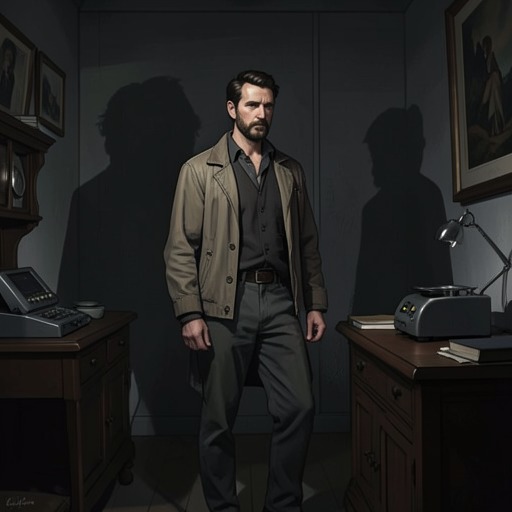
Her distrust is immediate and physical. She singles out his thick, black eyebrows, comparing them to hairbrushes, and the smell of boiled cabbage and pickled onions that clings to him. These details make him memorable before his actions are understood. Theodorosia’s vivid portrait is not a neutral description: she already suspects him, and his unpleasant appearance becomes part of the case she is building in her mind. Yet the book later makes that very conspicuousness important for a different reason: Nigel says Fagenbush was useful as a decoy because people would naturally look at him when something went wrong.
The Statuette and the Nighttime Clues
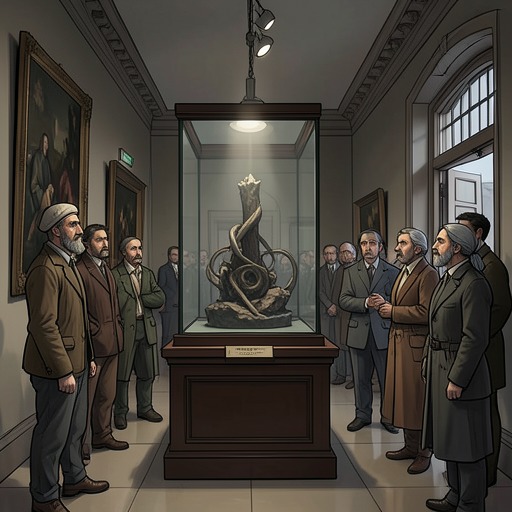
The Bastet statuette first draws suspicion because it is cursed, but that danger is invisible to most of the museum staff. Theodosia can sense the black magic clinging to ancient objects; neither her mother nor her father seems able to detect it, and she believes the assistant curators cannot either. Fagenbush is the exception she cannot confidently interpret. He watches the newly arrived statue with his face aglow and his long, bony fingers twitching, but, as Theodosia observes, he often looks that way. His reaction might indicate an interest in the artifact, or it might simply be his usual manner.
A nighttime encounter sharpens her suspicion. While someone lurks near the workroom, Theodosia first tries to determine whether the figure is human. A long black arm reaches out from beneath a cloak, and a current of air carries the familiar smell of cabbage and pickled onions to her. She identifies the figure as Fagenbush. The moment links him to the museum after hours and to the scent that has already made him recognizable, but it does not yet establish what he is doing there or why. For Theodosia, the sight is another piece of a growing pattern; for the reader, it remains an unsettling clue whose meaning is not yet settled.
The statuette gives their suspicion a concrete object. When Fagenbush confronts Theodosia and demands to know where it is, he says that Alistair has not noticed it is missing, while he has. He calls it an especially interesting artifact and admits that he has plans for it. His words support the conclusion that he wants access to the statuette, and his pursuit makes him seem implicated in its disappearance. But they do not prove that he is working with the larger conspiracy. The distinction between wanting the artifact and being the traitor becomes central to the eventual reversal.
The Accusation and Its Reversal
As the investigation turns toward the possibility of an insider, Theodosia assembles the clues around Fagenbush: he has acted strangely since the statuette arrived, appeared in the museum at night, and watched her when he thought she had the object. She confidently identifies him as the mole rather than Henrietta Throckmorton, whom the investigators have also considered. Theodosia’s conclusion is understandable in light of what she has witnessed, but it is still an inference, not a confirmed discovery.
Lord Wigmere rejects her accusation and tells her that Fagenbush has been thoroughly checked out. Stokes adds that the investigators have their own methods, without explaining them. Their response separates suspicion from proof: even though Fagenbush fits Theodosia’s theory, the people conducting the inquiry have information that she does not. Her certainty collapses into relief when she realizes that the evidence does not make her mother the traitor. Fagenbush has been a plausible suspect, not the answer to the central mystery.
The decisive explanation comes from Nigel. When Theodosia again recalls that she had been sure Fagenbush was the traitor, Nigel laughs and calls him useful. He says that Fagenbush is not the traitor, but a convenient diversion, and that he encouraged Alistair to hire him because Fagenbush looked so suspicious that attention would turn toward him if anything went wrong. The disclosure overturns the meaning of his earlier appearances: the suspicious impression that seemed to reveal guilt was, in Nigel’s account, precisely what made Fagenbush useful to the plotters.
Narrative Role
Fagenbush’s function in the mystery rests on the gap between visible suspiciousness and actual guilt. His eyebrows, smell, nighttime presence, interest in the cursed statue, and stated plans all give Theodosia reasons to watch him. Some details are genuinely concerning; others acquire their significance through her suspicions. The resulting misdirection does not make her observations meaningless, but it shows how quickly a collection of suggestive clues can harden into a confident explanation before the decisive evidence arrives.
The reversal also gives Fagenbush an unusual position in the conspiracy’s design. Nigel’s explanation makes him a deliberately conspicuous distraction, but the supplied account does not establish that Fagenbush knows he is serving that purpose. What it does establish is that Nigel saw his suspicious appearance as an advantage and encouraged Alistair to hire him accordingly. Fagenbush is therefore a decoy in the investigation’s pattern, whether or not he understands that role: his presence draws attention, while the true traitor remains free to act.
His characterization remains deliberately limited. The evidence shows an assistant curator who watches the Bastet statuette, notices its absence before Alistair does, expresses an interest in it, and says he has plans for it. It does not resolve those plans or show what further part he plays. The final revelation corrects Theodosia’s mistaken identification of him as the mole without erasing the reasons he seemed dangerous. Fagenbush matters less as the solution to the mystery than as the convincing false solution that exposes how effectively appearances can be arranged to misdirect suspicion.